How the Modules Connect
Every module in CommonGage reads from one shared record — the same events, people, sites, zones, and obligations the core platform already tracks. No module owns a private copy of that data, and the core never reads a module's data back. That boundary is what makes the next part possible: most modules publish a number into Goals & Measures, so a target can be set against anything any module already tracks, with no separate integration work.
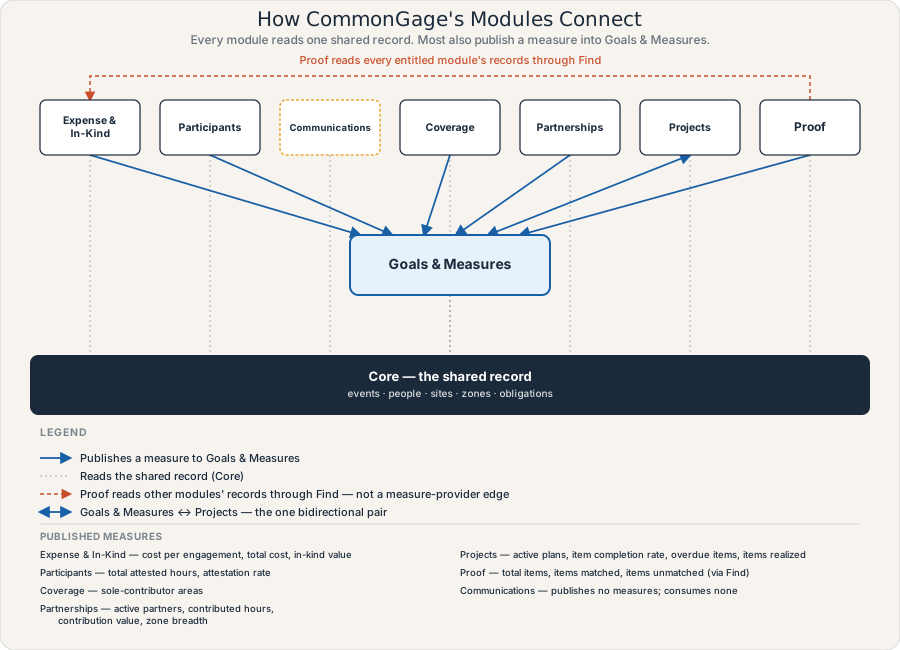
A few things worth naming explicitly:
- The bidirectional pair. Goals & Measures and Projects publish to each other — Projects sends plan measures (active plans, item completion rate, overdue items, items realized) the same way every other module does, and Goals & Measures sends measure lookups back, so a plan can link to the number it's meant to move. No other module pair works this way.
- Proof doesn't fit the pattern, on purpose. Every other module publishes a small set of computed numbers to Goals & Measures and nothing more. Proof instead reads records — obligations, events, participations, expense entries — directly from whichever domain a checklist item points at, through Find, under the caller's own entitlement. That is a structurally different relationship, which is why it's drawn separately rather than as another arrow into the hub.
- Communications publishes nothing. It tracks outbound press and inbound media coverage, but none of that becomes a measure today — there's no press-activity number sitting in Goals & Measures waiting for a target.
- A competitor built on a messaging layer, or a single-purpose data model, can't wire this together the way CommonGage does. The connections above aren't integrations between separate products — they're one record, read by eight lenses.
See the Module Catalog for what each module tracks, reports, and is used for.